


Child Education in Bangladesh: 5 Powerful Ways to Help
-
by
RUPSA
 RUPSA
Child education in Bangladesh starts with a simple morning routine: a bag on the shoulder and a walk to school. But for many children, the day begins differently. A boy heads to a tea stall to earn a few taka. A girl stays home to care for her younger siblings. A child who has lost both parents wonders whether anyone will ever pay for a notebook, let alone a school fee.
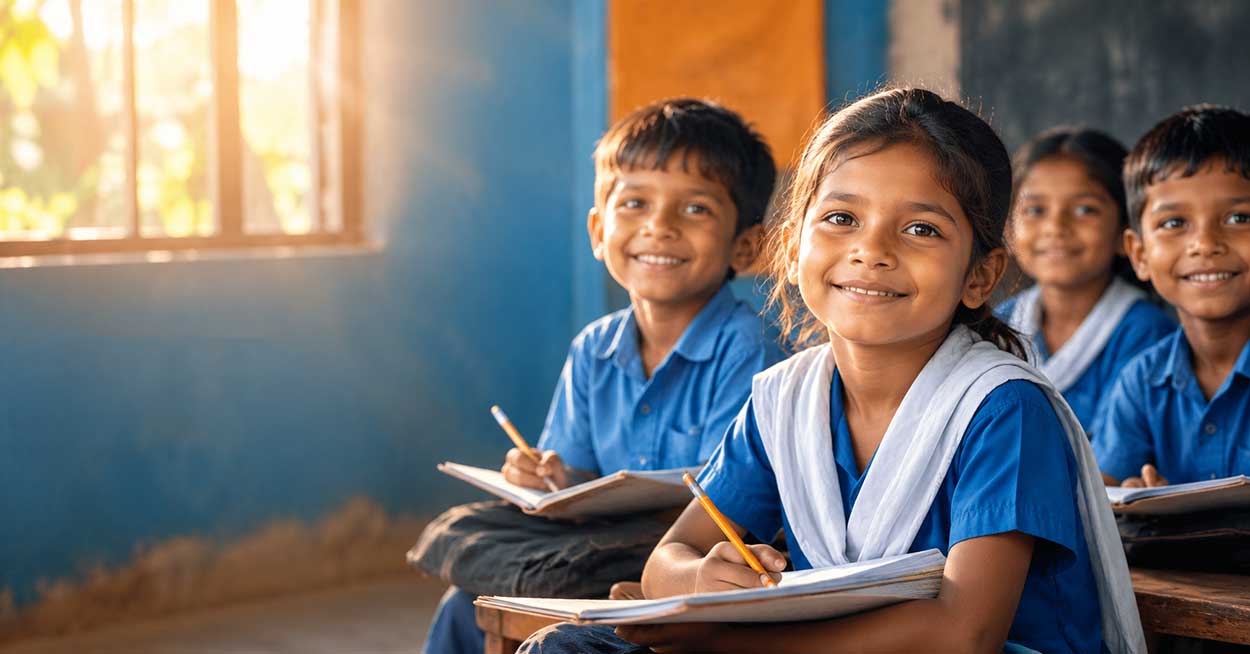 For these children, a donation for child education in Bangladesh is not charity in the abstract. It is the difference between a classroom and a closed door.
The Quiet Crisis in Child Education
Bangladesh has made real progress in getting children enrolled, yet keeping them in school is another story. UNICEF Bangladesh estimates that around one million primary-age children and three to four million secondary-age children are still out of school. Roughly 16% of students leave before finishing primary education, and nearly one-third drop out at the secondary level. Government figures also show the primary dropout rate rising again, from 13.15% in 2023 to 16.25% in 2024.
Behind every figure is a child, and usually a family making impossible choices about child education.
Barriers to Child Education: Why Children Leave School
Poverty Comes First
Even where tuition is free, schooling is not free of cost. Uniforms, exercise books, pens, exam fees and private tutoring add up quickly. For a family living on daily wages, these expenses compete with rice and rent.
Hunger in the Classroom
A hungry child struggles to concentrate. Analysts note that free school meals were once a key reason low-income parents kept children enrolled, and that without them, food-insecure families are more likely to withdraw their children.
Distance, Seasons and Sudden Shocks
In rural areas, school may be a long walk away. Floods, seasonal migration, illness or a lost job can interrupt a child’s studies, and sometimes end them.
Orphans Carry the Heaviest Burden
Children without parents often depend on relatives or care centres that are already stretched thin. Without someone to cover fees and supplies, school quietly becomes a luxury.
One Story That Shows Why Child Education Matters
Imagine a nine-year-old girl living with her elderly grandmother. She is quick with numbers and always the first to raise her hand. But when the new term begins, there is no money for a uniform, and her only notebook is full. Her grandmother softly suggests she stay home this year.
Now imagine that a few caring strangers, far away, cover her books, her uniform and a daily meal. Months later, she is reading aloud to her grandmother in the evening light. Nothing dramatic happened. A few simple things were provided, and an entire future stayed open.
How Child Education Breaks the Cycle of Poverty
Child education is one of the few gifts that keeps giving. A child who learns to read and calculate can earn a steadier income, make informed health choices, and guide their own children through school. Each educated child becomes a reason the next generation stays enrolled. Poverty rarely ends in one leap; it ends one classroom at a time.
5 Small Ways to Support Child Education
It is easy to believe that only large gifts matter. In reality, education costs are made of small, practical things:
- Books and stationery that let a child keep up with classmates
- A school uniform that removes shame and barriers
- Tuition or exam fees that keep a child enrolled
- A daily meal that makes learning possible
- Extra tutoring for children who have fallen behind
Even a modest contribution can cover one of these needs, and for a child, any one of them can decide whether they return to school next term.
Why Individual and Collective Giving Both Matter
Individual donors give consistency. A small monthly gift lets organisations plan ahead and support a child through a full school year, not just a single term.
Collective giving multiplies that effect. When families, friends, workplaces and community groups pool their support, they can sponsor several children at once, fund a learning space, or provide supplies for an entire class. Together, ordinary people can achieve what no single donor could.
A Gentle Invitation to Support Child Education
Every child in Bangladesh deserves the chance to learn, dream and grow with dignity. If this story has stayed with you, you may wish to learn more about child education initiatives and ways to support them at rupsa.org. Whether you give, share or simply spread the word, you help keep a classroom door open for a child who needs it.
 US Dollar
 Bangladeshi Taka
 British Pund